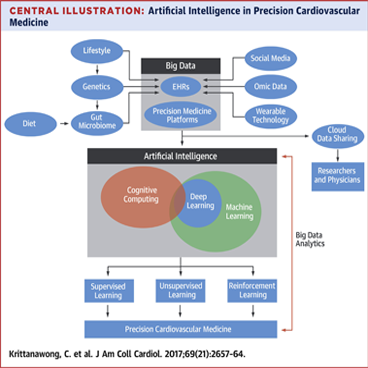
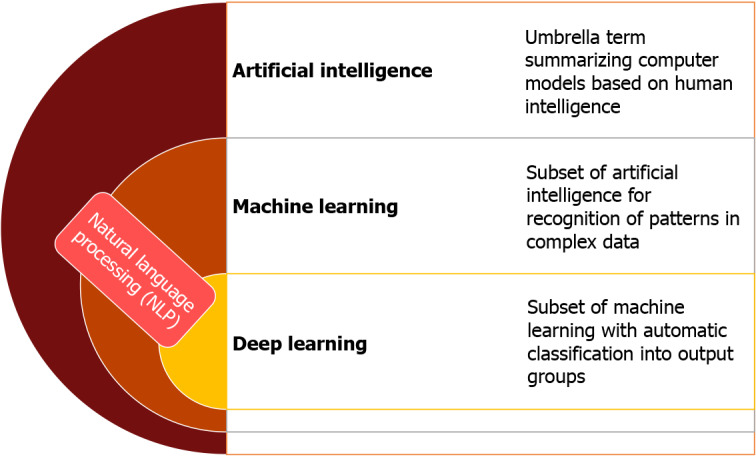
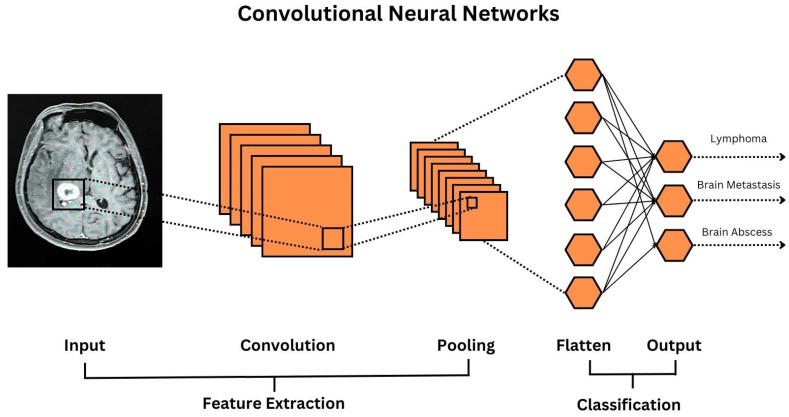
This review explores how Artificial Intelligence (AI) and machine learning can transform cardiovascular care. By analyzing large amounts of data from genomics, imaging, wearables, and electronic records, AI enables better disease phenotyping, more accurate risk prediction, improved imaging interpretation, and personalized treatment decisions — moving cardiology toward true precision medicine.
Featured Reviews
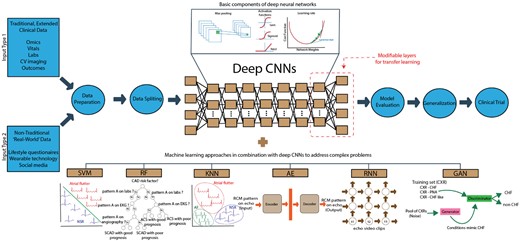
Deep learning for cardiovascular medicine: a practical primer
This practical review explains deep learning (a powerful form of artificial intelligence) and its applications in cardiovascular medicine. It covers how deep learning can analyze complex data from ECGs, echocardiograms, wearables, and electronic records to automate image interpretation, discover new disease subtypes, improve risk prediction, and support personalized treatment decisions.
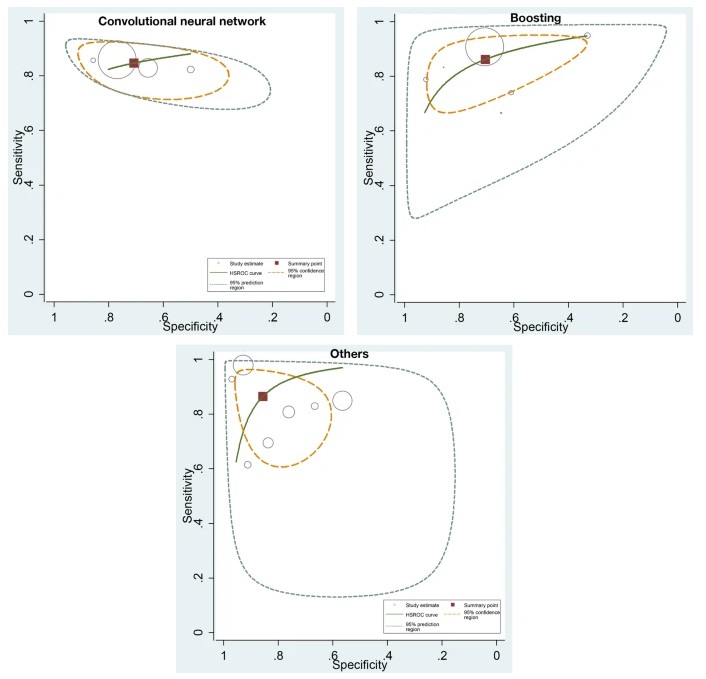
Machine learning prediction in cardiovascular diseases: a meta-analysis
This large meta-analysis of 103 cohorts (over 3.3 million patients) evaluated the performance of various machine learning algorithms in predicting cardiovascular diseases, including coronary artery disease (CAD), stroke, heart failure, and arrhythmias. Boosting and custom-built algorithms showed excellent results for CAD (AUC 0.88–0.93), while SVM, boosting, and CNN performed strongly for stroke (AUC 0.90–0.92). Overall, ML demonstrates promising predictive power and can help clinicians select optimal algorithms for risk prediction.
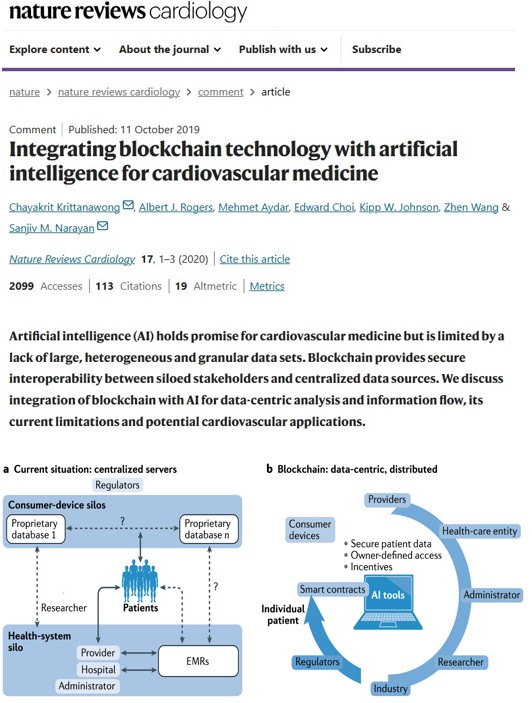
Integrating blockchain technology with artificial intelligence for cardiovascular medicine
This perspective article discusses how combining blockchain with artificial intelligence (AI) can overcome key limitations in cardiovascular medicine. Blockchain enables secure, interoperable sharing of large, heterogeneous patient data across institutions, while AI can analyze it for better insights. The integration could empower patients, improve data privacy, support precision medicine, and enhance research and clinical decision-making.
Artificial Intelligence and Cardiovascular Genetics
This review explores how artificial intelligence (AI) and machine learning can address the challenges of polygenic cardiovascular diseases. By combining AI with next-generation sequencing (NGS) and genomic data, it enables better understanding of disease heterogeneity, improved variant interpretation, novel phenotype discovery, and more personalized risk prediction and treatment in cardiovascular genetics.
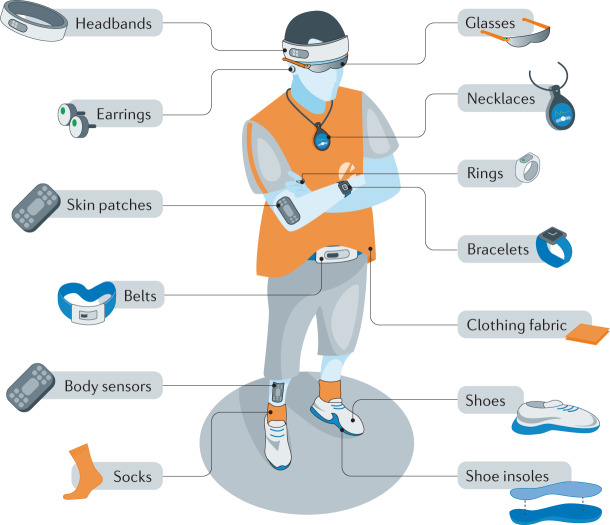
Integration of novel monitoring devices with machine learning technology for scalable cardiovascular management
This perspective article discusses how combining blockchain with artificial intelligence (AI) can overcome key limitations in cardiovascular medicine. Blockchain enables secure, interoperable sharing of large, heterogeneous patient data across institutions, while AI can analyze it for better insights. The integration could empower patients, improve data privacy, support precision medicine, and enhance research and clinical decision-making.
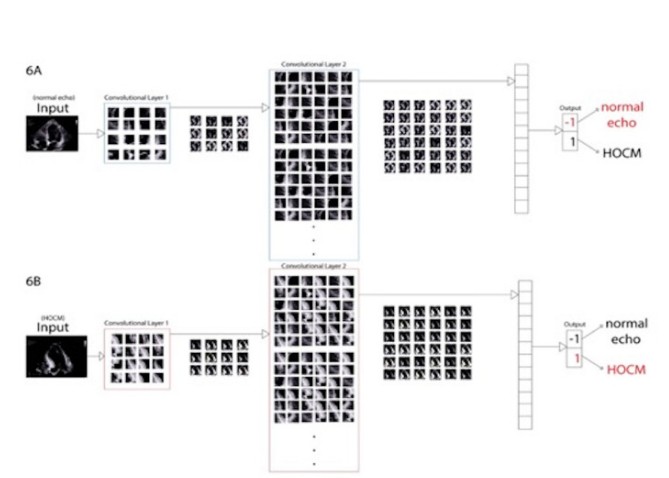
Deep Learning for Echocardiography: Introduction for Clinicians and Future Vision
This state-of-the-art review introduces clinicians to deep learning (DL) techniques for echocardiography. It explains key DL architectures for image and video classification, highlights current applications in automating echo analysis, improving diagnostic accuracy, and supporting clinical workflows, while outlining future directions in cardiovascular imaging.
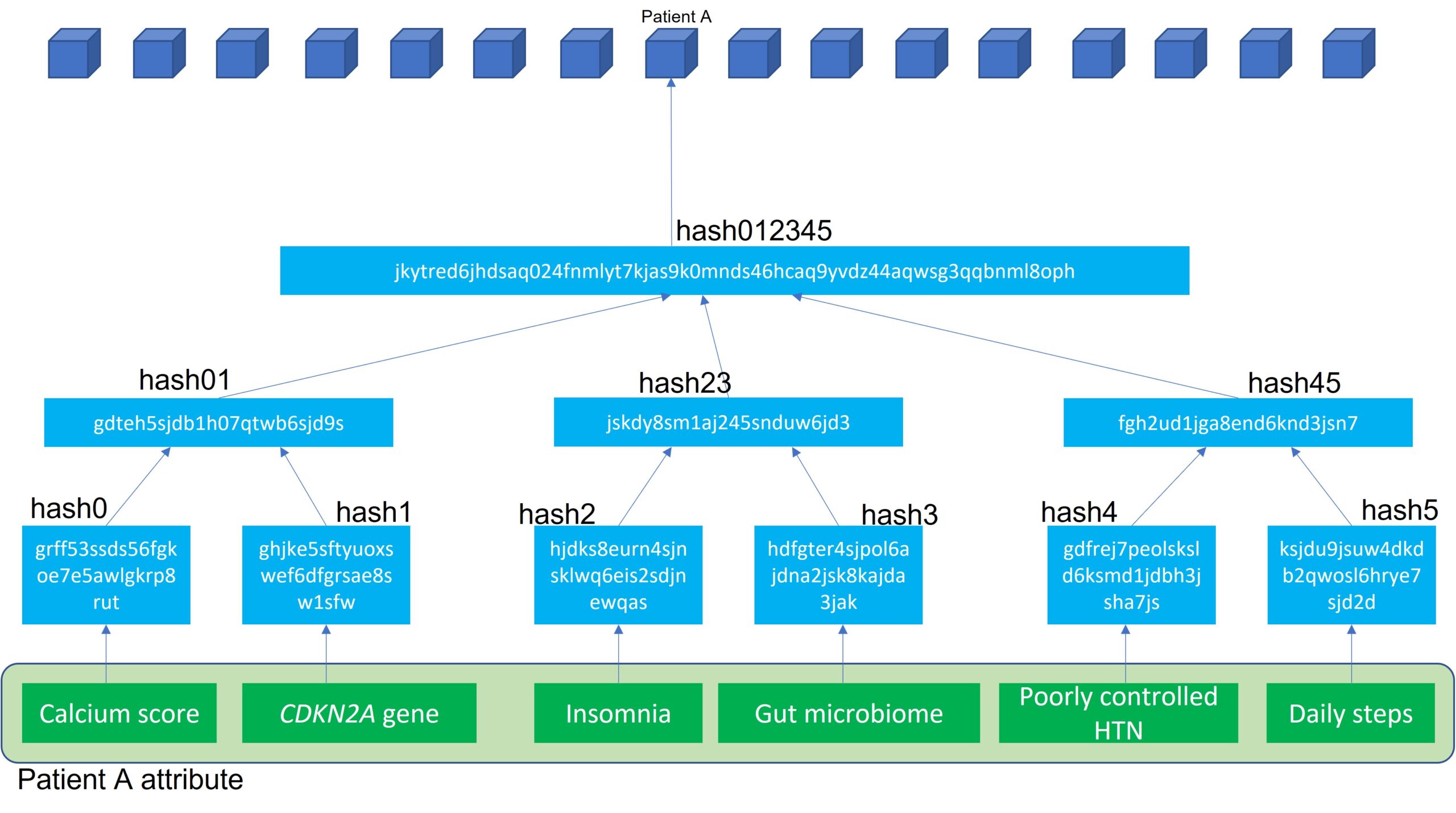
Artificial Intelligence-Powered Blockchains for Cardiovascular Medicine
This review explores the integration of blockchain and artificial intelligence (AI) to address data security, privacy, and interoperability challenges in cardiovascular medicine. Blockchain provides secure, decentralized data sharing, while AI enables powerful analysis of big data from genomics, wearables, and clinical records. Together, they support precision medicine, decentralized clinical trials, and improved patient-centered care.
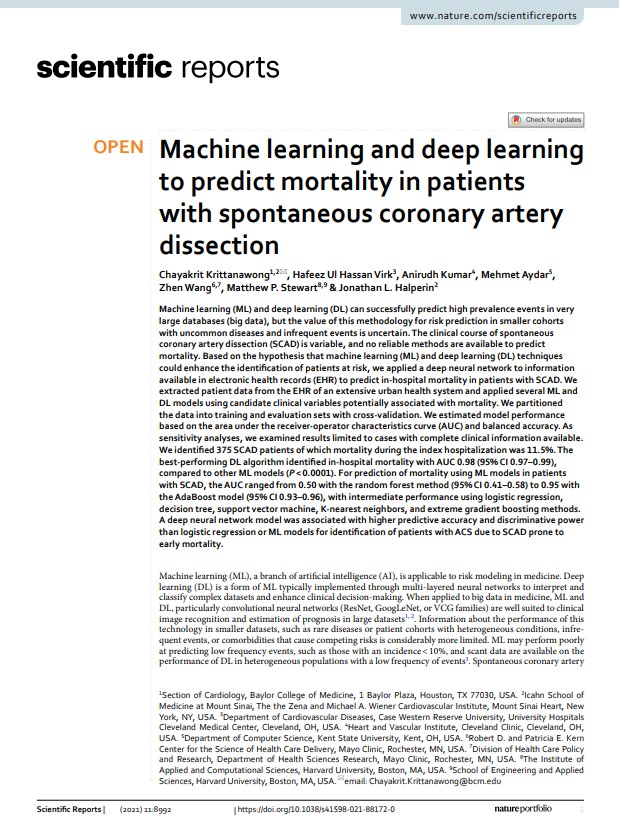
Machine learning and deep learning to predict mortality in patients with spontaneous coronary artery dissection
This study tested machine learning (ML) and deep learning (DL) models to predict in-hospital mortality in 375 patients with spontaneous coronary artery dissection (SCAD) — a rare and challenging condition. Using electronic health record data, a deep neural network achieved excellent performance (AUC 0.98), outperforming traditional ML models and logistic regression. The findings show that DL can effectively predict rare events even in smaller, complex patient cohorts.
Artificial intelligence in gastroenterology: A state-of-the-art review
This comprehensive review examines the rapid growth of artificial intelligence (AI) applications in gastroenterology and hepatology. It covers AI tools for detecting premalignant and malignant lesions (e.g., Barrett’s esophagus, esophageal cancer, polyps), lesion characterization, risk stratification, prognosis prediction, and quality metrics such as bowel preparation scoring. The paper highlights strong performance of deep learning models across the GI tract, pancreas, and liver, while discussing current limitations and future directions.
Artificial Intelligence in Neurosurgery: A State-of-the-Art Review from Past to Future
This comprehensive review covers the applications of artificial intelligence (AI) and machine learning in neurosurgery. It highlights AI’s role in tumor detection, spine surgery, epilepsy management, vascular neurosurgery, outcome prediction, and surgical precision — from preoperative planning to intraoperative support and postoperative care. The paper provides a forward-looking perspective on how AI can improve accuracy, reduce complications, and advance personalized neurosurgical care.